

How Web Design Agencies Can Offer SEO Services Without Building an In-House SEO Team :Many web design agencies reach the same point in their growth journey. A client is delighted with a newly launched website, but within a few weeks asks a familiar question:
“Can you also help us rank on Google?”
For many agencies, this is where opportunity meets uncertainty. While delivering websites is their core expertise, offering ongoing SEO services often requires specialized skills, dedicated resources, continuous monitoring, and regular reporting. Hiring an entire SEO department can be expensive, especially for small and mid-sized agencies operating with limited budgets or fluctuating project workloads.
As a result, agencies frequently decline SEO requests, refer clients elsewhere, or attempt to manage SEO internally without sufficient experience. Unfortunately, each of these choices can affect client retention, reduce recurring revenue, and limit long-term business growth.
Fortunately, there is another approach.
Today, many successful web design agencies offer professional SEO services without building a full-time in-house SEO team. By working through reliable white label partnerships and well-defined workflows, agencies can expand their service portfolio, improve customer satisfaction, and maintain complete control over client relationships.
In this guide, we’ll explain how web design agencies can successfully offer SEO services without hiring an in-house SEO team, the benefits and challenges involved, common mistakes to avoid, and how Indian agencies can use this model to build a more scalable business.
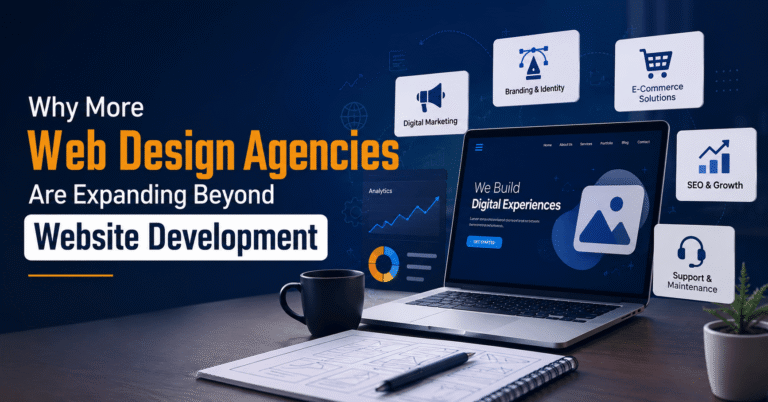
Why More Web Design Agencies Are Expanding Beyond Website Development
The digital marketing landscape has changed significantly over the past few years.
Businesses no longer see their website as a one-time investment. Instead, they expect it to become a lead-generation asset that improves online visibility, attracts qualified visitors, and contributes to long-term business success.
From our experience working with Indian businesses, a website launch is often only the beginning. Once the site is live, business owners quickly begin asking questions like:
- Why isn’t my website appearing on Google?
- Why am I getting traffic but very few enquiries?
- Which keywords should my business target?
- How can we compete with larger companies online?
- How do we generate consistent leads every month?
These questions naturally extend beyond website design into SEO and digital marketing strategy.
For agencies, this creates both an opportunity and a challenge.
What Prevents Many Agencies from Building an In-House SEO Team?
Although SEO demand continues to increase, building an internal department isn’t always the right business decision.
Several practical factors influence this decision.
Hiring Experienced SEO Professionals Is Expensive
Effective SEO involves much more than inserting keywords into webpages.
A successful campaign may require:
- Technical website audits
- Search intent research
- Competitor analysis
- Content planning
- On-page optimization
- Link acquisition strategies
- Local SEO optimization
- Performance tracking
- Monthly reporting
Finding professionals with expertise across all these areas often requires significant investment.
Workloads Are Not Always Consistent
Many web design agencies operate on project-based revenue.
One month may involve launching ten websites, while the next month focuses primarily on revisions and maintenance.
Maintaining a permanent SEO department during slower periods can reduce profitability and overall operational efficiency.
This is especially true for growing agencies in Ahmedabad, Mumbai, Bengaluru, Pune, and other competitive Indian markets where hiring experienced digital marketers can be costly.
SEO Requires Continuous Learning
Google’s search algorithms evolve regularly.
Best practices related to technical SEO, structured data, Core Web Vitals, search intent, and content quality continue to change.
Without continuous learning and adaptability, an internal team can quickly fall behind.
Successful SEO requires ongoing innovation, continuous optimization, regular analysis, and a commitment to improving campaign performance over time.

The Business Opportunity Agencies Often Overlook
Many agencies assume clients only want a beautiful website.
In reality, most businesses want measurable outcomes.
These outcomes may include:
- More qualified enquiries
- Higher organic visibility
- Better lead quality
- Increased phone calls
- More WhatsApp enquiries
- Improved local search presence
- Stronger brand authority
- Sustainable business growth
When agencies cannot provide these services, clients often begin searching for another marketing partner.
This creates two risks:
- Losing future recurring revenue.
- Losing the client relationship altogether.
Offering SEO—even through an outsourced delivery model—helps agencies remain the client’s primary marketing partner while strengthening trust, communication, and long-term partnerships.
What Does White Label SEO Actually Mean?
White label SEO is a business model where one company performs SEO work while another agency delivers those services under its own brand.
From the client’s perspective, they continue working only with their web design agency.
Behind the scenes, an experienced SEO partner manages activities such as:
- Keyword research
- Technical SEO
- Content optimization
- Local SEO
- Link building
- Monthly reporting
- Performance monitoring
- SEO recommendations
The agency remains responsible for client communication, project management, and overall strategy, while the SEO provider focuses on execution and technical delivery.
This collaborative approach improves workflow, productivity, delivery, and service quality without requiring agencies to recruit a full in-house SEO department.
Benefits of Offering SEO Without an In-House Team
1. Better Scalability
One of the biggest advantages is scalability.
Instead of hiring employees every time new SEO clients arrive, agencies can increase or decrease service capacity based on demand.
This flexibility allows agencies to grow sustainably while reducing operational risk.
2. Improved Client Retention
Clients generally prefer working with a single trusted agency.
If your agency manages both web design and SEO, clients are less likely to seek additional vendors.
Higher retention strengthens long-term relationships and increases lifetime customer value.
3. Increased Recurring Revenue
Website projects are often one-time engagements.
SEO, however, is usually an ongoing monthly service.
Adding SEO enables agencies to create predictable recurring income rather than relying solely on new website projects.
4. Greater Operational Efficiency
Rather than dividing attention between website development and SEO execution, agency owners can focus on their core strengths while relying on experienced specialists for optimization, reporting, and campaign management.
This improves overall efficiency, accountability, consistency, and client experience.
5. Stronger Competitive Position
In competitive markets across India, businesses increasingly look for agencies that provide complete digital marketing solutions.
Offering SEO alongside website development positions your agency as a long-term strategic partner rather than simply a website vendor.
Step-by-Step Framework: How Web Design Agencies Can Offer SEO Without an In-House SEO Team
Step 1: Understand Your Client's Goals
Before discussing rankings or keywords, understand what the client wants to achieve.
Ask questions such as:
- Do they want more website enquiries?
- Are they targeting local customers or nationwide clients?
- Is the goal ecommerce sales or B2B lead generation?
- Which services generate the highest profit?
- What does success look like after six to twelve months?
This consultation stage helps create a strategy focused on business outcomes rather than vanity metrics.
Step 2: Conduct a Website and SEO Audit
A proper audit helps identify technical and content-related issues before optimization begins.
Review areas such as:
- Website speed and Core Web Vitals
- Mobile responsiveness
- URL structure
- Metadata
- Internal linking
- Indexing issues
- Broken links
- Google Search Console insights
- Google Analytics data
This analysis provides valuable insights into the website’s current performance and highlights opportunities for improvement.
Step 3: Partner With a Reliable White Label SEO Provider
Choose a partner that demonstrates:
- Proven SEO expertise
- Transparent communication
- Consistent monthly reporting
- Ethical SEO practices
- Clear project management
- Reliable turnaround times
- Strong accountability
- Flexible service packages
A dependable partner becomes an extension of your agency rather than simply another vendor.
Step 4: Create a Standardized Workflow
Document every stage of project delivery.
For example:
Client Onboarding → Website Audit → Keyword Research → Strategy Approval → Technical SEO → Content Optimization → Link Building → Monthly Reporting → Review & Optimization
A documented workflow improves consistency, reduces errors, and increases team productivity.
Step 5: Keep Client Communication Under Your Brand
One of the biggest advantages of white label SEO is maintaining your agency’s brand identity.
Clients continue communicating with your agency while the SEO specialists work behind the scenes.
This strengthens trust, improves engagement, and builds long-term business relationships.
Practical Business Example 1
A web design agency in Ahmedabad launched websites for local clinics and healthcare practices.
Most clients returned after two or three months asking why they weren’t receiving enough appointment enquiries despite having modern websites.
Instead of hiring an SEO team immediately, the agency partnered with a white label SEO provider.
The provider handled technical SEO, local optimization, content recommendations, and monthly reporting, while the agency remained responsible for client communication.
This approach allowed the agency to expand its services, improve client satisfaction, and generate recurring monthly revenue without increasing payroll costs.
Practical Business Example 2
A web design agency working with manufacturing companies across Gujarat noticed many clients wanted to rank for industry-specific B2B keywords.
The agency had excellent web development skills but limited SEO experience.
Rather than declining the work, they outsourced SEO execution through a trusted partner while focusing on account management and client strategy.
The result was a more complete service offering, stronger client relationships, and improved business growth through long-term retainers.
Common Mistakes Agencies Should Avoid
Even with the right partnership, agencies can face challenges if they overlook key processes.
Choosing the Cheapest Provider
Low pricing often comes at the expense of service quality, communication, or long-term results.
Evaluate experience, processes, transparency, and support—not just cost.
Selling SEO Without Understanding It
Even if execution is outsourced, agency owners should understand SEO fundamentals.
Clients expect strategic advice, realistic timelines, and informed recommendations.
Ignoring Reporting
Clients want to understand what work has been completed and how campaigns are progressing.
Monthly reporting, monitoring, and performance reviews help build credibility and long-term trust.
Promising Guaranteed Rankings
No ethical SEO agency can guarantee first-page rankings or a specific number of leads.
SEO results depend on factors such as:
- Competition
- Industry
- Website quality
- Search demand
- Budget
- Content quality
- Technical implementation
- Ongoing optimization
Being transparent strengthens client confidence.
How to Measure Whether Your SEO Service Is Working
Instead of focusing on rankings alone, monitor meaningful business metrics.
Track:
- Organic website traffic
- Qualified enquiries
- Phone calls
- WhatsApp leads
- Contact form submissions
- Google Business Profile interactions
- Keyword visibility
- Conversion rate
- Bounce rate
- Engagement time
- Returning visitors
These metrics provide a clearer picture of campaign effectiveness than rankings alone.
How This Strategy Benefits Different Indian Industries
Healthcare
Local SEO, Google Business Profile optimization, and informative service pages help clinics attract patients searching for nearby healthcare services.
Real Estate
SEO supports long-term visibility for location-specific property searches while complementing paid advertising campaigns.
Manufacturing
Targeting commercial-intent keywords helps manufacturers generate higher-quality B2B enquiries rather than general website traffic.
Education
Educational institutions benefit from seasonal SEO planning, localized content, and course-specific landing pages during admission periods.
Ecommerce
SEO improves product visibility while supporting content marketing, category optimization, and long-term customer acquisition.
Professional Services
Law firms, consultants, architects, accountants, and financial advisors can build authority through informative content and local search optimization.
Myths vs Facts
Myth | Fact |
SEO requires a large internal team. | Many agencies successfully deliver SEO through trusted white label partnerships. |
Beautiful websites automatically rank on Google. | Design improves user experience, but SEO is essential for search visibility. |
More traffic always means more revenue. | Qualified traffic and strong conversion optimization matter far more than visitor numbers. |
SEO produces instant results. | SEO is a long-term strategy requiring consistent optimization and patience. |
Clients only care about rankings. | Businesses ultimately value enquiries, sales, revenue, and measurable business outcomes. |
Conclusion
Modern web design agencies are no longer expected to deliver only attractive websites. Businesses increasingly look for long-term partners who can improve online visibility, generate qualified enquiries, and support sustainable business growth.
Building an in-house SEO department isn’t the only way to meet those expectations. By establishing the right collaboration, investing in reliable partnerships, creating standardized workflows, maintaining transparency, and focusing on continuous optimization, agencies can confidently offer professional SEO services while keeping operational costs under control.
For many agencies across India, this approach provides the flexibility to scale, improve client retention, strengthen trust, increase recurring revenue, and deliver consistent value without the complexity of recruiting and managing a dedicated SEO team.
How Web Design Agencies Can Offer SEO Services Without Building an In-House SEO Team