

Imagine launching a new business in India with a budget of ₹20,000 for marketing. Your website is ready, your product or service is available, and you are excited to get your first customers.
Then the advice starts coming from every direction.
One agency recommends spending ₹15,000 per month on SEO. Another suggests running Instagram advertisements immediately. Someone else says you need daily reels, professional branding, influencer marketing, and a complete digital marketing package before you can compete.
Within a few days, you are confused about where to invest your limited money.
Should you run Google Ads? Is social media marketing enough? Can affordable digital marketing solutions for startups actually generate customers, or will you simply spend money without seeing results?
The real problem is not that digital marketing is too expensive. It is that many businesses start spending before understanding which marketing activity can realistically help them acquire customers.
For a new business, every rupee matters. Money spent on the wrong audience, an unclear offer, or a poorly designed landing page can disappear without generating a single meaningful enquiry.
The smarter approach is to start small, measure what works, and increase spending only when there is evidence that your marketing is producing results.
This guide explains how Indian startups and small businesses can build a practical digital marketing strategy, choose affordable tools, allocate a limited budget, and avoid common mistakes.
The examples and budgets below are illustrative planning estimates, not guaranteed market rates or verified client results. Actual costs depend on the industry, city, competition, audience, and quality of execution.
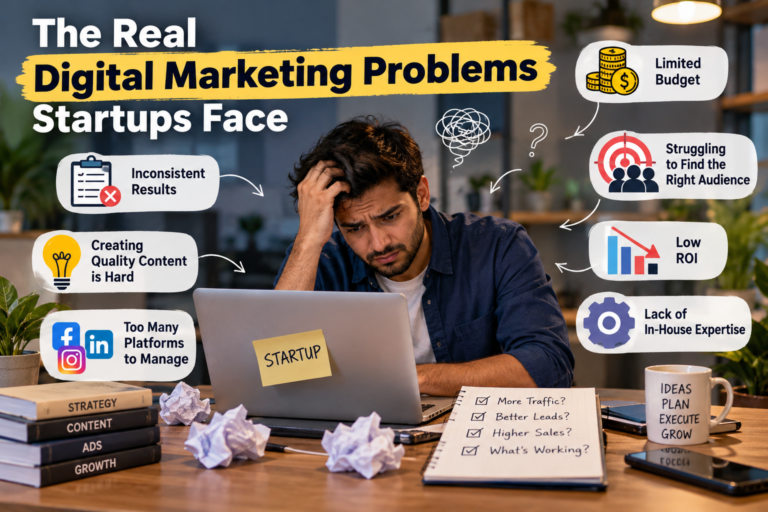
The Real Digital Marketing Problems Startups Face
Affordable marketing is not simply about finding the cheapest agency or using free tools. It is about avoiding spending that does not contribute to a business objective.
Problem 1: Spending on Too Many Channels at Once
A startup may try Instagram, Facebook, Google Ads, SEO, YouTube, email marketing, and influencer collaborations simultaneously.
The result is often scattered effort. There is not enough money to test each channel properly, and the business cannot identify which activity generated the enquiries.
What to do instead:
Choose one primary acquisition channel and one supporting channel. For example, a local service business might start with Google Business Profile and local SEO, while a visually driven consumer brand might test Instagram content and a small advertising campaign.
Problem 2: Confusing Likes With Customers
A social media post can receive hundreds of likes without generating a single sale. Engagement may indicate interest, but it does not automatically demonstrate commercial value.
Track enquiries, qualified leads, bookings, purchases, and repeat customers. These metrics tell you more about business performance than follower counts alone.
Problem 3: Choosing the Cheapest Digital Marketing Agency
A low-cost package may promise daily posts, backlinks, rankings, or a large volume of content. However, the number of deliverables does not tell you whether those activities are appropriate for your business.
Before hiring an agency, ask what it will measure, what work it will actually perform, and how it will report outcomes.
A ₹5,000 package with a clear strategy may be more useful than a ₹20,000 package filled with activities your business does not need. The reverse can also be true if the cheaper provider lacks the skills required.
Problem 4: Running Ads Before the Website Is Ready
Paid advertising can bring visitors quickly, but it cannot fix a confusing offer, slow landing page, missing contact details, or weak customer trust.
If visitors cannot understand your product, price, delivery terms, or next step, paying for additional traffic may simply increase your losses.
Before launching advertisements, test the complete journey from clicking an ad to contacting your business or completing a purchase.
Problem 5: Expecting Immediate SEO Results
Search engine optimisation can support long-term customer acquisition, but new websites often need time to establish useful content, technical quality, and credibility.
A startup that needs enquiries this week should not rely entirely on organic search. It may need direct outreach, local listings, partnerships, or carefully controlled paid advertising while building its SEO foundation and exploring Digital marketing services for growing businesses to support its longer-term marketing needs.
Problem 6: Ignoring Local Customer Behaviour
An Ahmedabad-based service provider targeting customers in Gujarat may need Gujarati content, local search visibility, WhatsApp enquiries, and area-specific landing pages.
A business selling nationally may need a different approach involving shipping information, product demonstrations, online payments, and customer reviews.
There is no single affordable digital marketing strategy that works equally well for every startup.
Step-by-Step Digital Marketing Plan for a New Business
Step 1: Define Your Target Audience and Business Goal
What to do
Before choosing a marketing channel, answer these questions:
- Who is most likely to buy your product or service?
- What problem are you solving?
- Which locations do you serve?
- What makes your offer useful or different?
- What action should a potential customer take?
For example, a new website development company might target small businesses that need affordable business websites. Its immediate goal could be to generate ten qualified enquiries per month rather than gain 1,000 social media followers.
Why it matters
A clear audience makes it easier to select keywords, write advertisements, create useful content, and choose where to spend money.
Mistakes to avoid
Do not target everyone. Avoid vague messages such as “We provide the best digital solutions.” Explain exactly whom you help and what outcome you provide.
Practical tip
Interview five to ten potential customers if possible. Ask what they currently struggle with, what alternatives they have tried, and what would make them trust a new provider. Their answers can improve your messaging before you invest in advertising.
Step 2: Build a Simple, Conversion-Focused Website
What to do
Create a website that clearly communicates your offer and makes contacting you easy. A startup website does not need dozens of pages at launch.
Begin with:
- A clear homepage and value proposition.
- Dedicated service or product pages.
- Transparent pricing or a clear quotation process.
- Contact information and a simple enquiry form.
- Testimonials or genuine examples of work, when available.
- Privacy information and applicable business policies.
- Mobile-friendly design and reasonable loading speed.
WordPress can be a practical option for many small businesses because it supports content publishing and a wide range of extensions. A simpler website builder may be sufficient for businesses that do not need extensive customisation.
Why it matters
Your website is where many potential customers decide whether your business looks credible enough to contact. It should answer their questions, not simply look attractive.
Mistakes to avoid
Do not spend your entire startup budget on an elaborate website before validating demand. Equally, do not use a broken, confusing, or untrustworthy website to support expensive campaigns.
Practical tip
Ask someone unfamiliar with your business to open the homepage on a mobile phone. Give them ten seconds to explain what you offer and how they would contact you. If they cannot answer, improve the page.
Step 3: Select One Primary Marketing Channel
What to do
Choose your main channel based on how customers discover and purchase your type of product.
| Business Type | Practical Starting Channel |
|---|---|
| Local service business | Google Business Profile and local SEO |
| B2B consultancy | LinkedIn, useful website content, and direct outreach |
| E-commerce startup | Product pages, social content, and controlled paid tests |
| Professional services | Search visibility, referrals, and educational content |
| Visual consumer brand | Instagram content and relevant creator partnerships |
| Software startup | Search-focused content, product demos, and targeted outreach |
These are starting hypotheses, not universal rules. Test the channel against actual customer enquiries and sales.
Why it matters
Concentrating limited resources makes it easier to produce consistent work and learn from the results.
Mistakes to avoid
Do not launch on every platform simply because competitors use them. Do not assume a channel is profitable because it is popular.
Practical tip
Run a 30-day test with a defined target, such as qualified enquiries, product demonstrations, or completed purchases. Review performance before deciding whether to continue, change the approach, or stop.
Step 4: Use SEO to Build Long-Term Visibility
What to do
Search engine optimisation helps potential customers discover your business when they search for relevant products, services, or solutions.
Start with the basics:
- Research keywords based on customer intent.
- Create helpful service pages for your actual offerings.
- Publish articles answering genuine customer questions.
- Improve titles, headings, internal links, and page structure.
- Fix important technical issues affecting crawling and usability.
- Set up Google Search Console and monitor search performance.
- Maintain accurate local business information where relevant.
For example, a web development startup in Ahmedabad might create a detailed service page for small business website development in Ahmedabad, supported by useful articles about website costs, features, and common mistakes.
Why it matters
Useful organic search traffic can become an additional source of customer acquisition over time, reducing dependence on paid advertising.
Mistakes to avoid
Avoid publishing dozens of near-identical articles, buying suspicious backlinks, or promising guaranteed first-page rankings. Search visibility depends on competition, relevance, technical quality, and other factors outside a business owner’s direct control.
Practical tip
Publish fewer, more useful pages. Each page should help a real customer make a decision, understand a cost, compare options, or solve a problem.
Step 5: Create Useful Content and Social Media Posts
What to do
Develop a manageable content plan based on the questions your customers ask before buying.
Useful content formats include:
- Short educational videos.
- Product demonstrations.
- Customer questions and answers.
- Before-and-after examples where genuine.
- Case studies with documented results.
- Pricing explanations and buying guides.
- Behind-the-scenes demonstrations of your process.
A small business can begin with two or three strong posts each week rather than attempting to publish multiple times every day.
Why it matters
Consistent, useful content can demonstrate expertise, answer objections, and help potential customers evaluate your business before making contact.
Mistakes to avoid
Do not copy competitors’ content, invent customer success stories, or publish generic AI-generated articles without meaningful review.
Practical tip
Turn one customer question into several useful formats. A detailed article about website pricing could become a short video, a social media carousel, and a checklist. Adapt the content to each format instead of simply duplicating it.
Step 6: Test Paid Advertising With Strict Budget Limits
What to do
Google Ads can help reach people actively searching for a solution. Meta Ads can help businesses reach relevant audiences through Facebook and Instagram.
Start with a small test that includes:
- A clearly defined audience.
- One specific offer.
- A dedicated landing page or relevant product page.
- Conversion tracking.
- A maximum spending limit.
- A review date and stopping criteria.
Why it matters
Paid advertising can generate faster feedback than SEO, but every click costs money. A campaign should be judged by the quality and cost of the outcomes it produces.
Mistakes to avoid
Do not increase a campaign budget simply because impressions and clicks are rising. Do not judge a campaign solely by the platform’s reported conversions without checking whether those conversions represent genuine enquiries or sales.
Practical tip
Calculate the maximum affordable customer acquisition cost before starting. If your business earns ₹2,000 in gross contribution from a sale, spending ₹1,800 to acquire that customer may leave too little to cover overhead and profit.
Step 7: Use Free and Affordable Marketing Tools
What to do
Use tools that solve specific problems instead of purchasing subscriptions for every marketing task.
| Need | Possible Tool |
|---|---|
| Website and blog | WordPress or a suitable website builder |
| Search performance | Google Search Console |
| Website analytics | Google Analytics |
| Business listings | Google Business Profile, where eligible |
| Creative design | Canva or a similar design tool |
| Email marketing | A suitable free or entry-level email platform |
| Social scheduling | Native platform scheduling tools |
| Enquiry management | Spreadsheet or a basic CRM |
| Communication | WhatsApp Business, where appropriate |
Free tiers and features can change. Check current limits, data policies, and commercial-use terms before committing.
Why it matters
Startups often need better processes, not more software. A spreadsheet that tracks every enquiry may be sufficient before a paid CRM becomes necessary.
Mistakes to avoid
Do not subscribe to tools you rarely use. Do not collect customer information without appropriate consent or ignore applicable privacy requirements.
Practical tip
Create one simple tracking sheet with the enquiry date, source, customer requirement, estimated value, follow-up date, and final outcome. This helps you identify which marketing activities actually contribute to sales.
Step 8: Measure Results and Improve Every Month
What to do
Track metrics that correspond to your business goal.
| Metric | What It Tells You |
|---|---|
| Qualified enquiries | Whether you are attracting potential buyers |
| Cost per lead | How much it costs to generate an enquiry |
| Lead-to-customer rate | Whether enquiries turn into customers |
| Customer acquisition cost | The marketing and sales cost of acquiring a customer |
| Conversion rate | How often visitors complete a desired action |
| Revenue and gross margin | Whether growth contributes to business sustainability |
| Organic search performance | Whether useful search visibility is improving |
Why it matters
Without measurement, a startup may continue funding activities that look busy but do not generate commercial value.
Mistakes to avoid
Do not expect every channel to show results within the same period. Paid campaigns can provide relatively quick feedback, while SEO and brand-building often require a longer evaluation window.
Practical tip
Hold a monthly review. Continue what produces qualified results, improve what shows promising but weak performance, and stop what repeatedly fails to meet a reasonable target.
Realistic Case Studies: How a Small Budget Can Be Used
The following examples are hypothetical planning scenarios, not verified client case studies or promises of performance. They illustrate how a business could evaluate affordable digital marketing solutions for startups.
Case Study 1: A Local Service Startup
Business: A small website development and digital services company.
Starting situation: The founder has limited funds, a basic website, and no established customer base.
Illustrative monthly budget: ₹10,000.
| Activity | Monthly Allocation |
|---|---|
| Local SEO and website improvements | ₹2,500 |
| Educational content and social posts | ₹2,000 |
| Small paid advertising test | ₹3,500 |
| Tools and miscellaneous costs | ₹1,000 |
| Contingency | ₹1,000 |
| Total | ₹10,000 |
The business first improves its service pages, adds clear contact options, and prepares a small number of useful articles. It then tests a focused advertising campaign instead of promoting every service at once.
Suppose the campaign generates 12 enquiries, of which four are qualified, and one becomes a customer. If that customer produces ₹18,000 in gross contribution before the marketing expense, the result could justify further investigation.
However, one customer does not establish that the campaign will remain profitable. The business still needs to account for sales time, delivery costs, refunds, and repeatability.
Lesson learned: A small budget can support structured testing, but a sale is meaningful only when the business understands its true costs and can reproduce the result.
Case Study 2: A Small E-commerce Startup
Business: An online brand selling home accessories.
Starting situation: The owner has a small catalogue and wants to test whether customers will buy without spending heavily on advertising.
Illustrative test budget: ₹15,000 over one month.
| Activity | Budget |
|---|---|
| Product photography and creative preparation | ₹3,000 |
| Paid advertising experiments | ₹7,000 |
| Product-page improvements | ₹2,000 |
| Email and customer follow-up setup | ₹1,000 |
| Contingency | ₹2,000 |
| Total | ₹15,000 |
The owner tests a small number of products, checks whether visitors understand delivery charges and return policies, and monitors completed orders rather than clicks alone.
Suppose advertising produces five orders at an average order value of ₹1,500. Revenue would be ₹7,500. That does not mean the campaign is profitable: product costs, shipping, payment fees, taxes where applicable, returns, and advertising expenses still need to be considered.
If the first test is unprofitable, the owner should investigate product-page conversion, customer objections, pricing, and audience quality before increasing the budget.
Lesson learned: Revenue is not profit. A startup should validate its unit economics before scaling paid campaigns.
Read More :- How To Start White Label Digital Marketing
Realistic Testimonials: What Trustworthy Evidence Looks Like
Testimonials should come from actual customers who have given permission for their statements to be published. Invented testimonials can mislead readers and damage business credibility.
The following are illustrative testimonial formats, not genuine customer endorsements. Replace them only with verified feedback from real customers.
Example format 1 — Small business owner
“We started with a basic website and a limited marketing budget. Having a clear monthly plan helped us understand what needed improvement instead of trying every platform at once.”
Example format 2 — Early-stage founder
“We were spending time on social media but were not tracking enquiries properly. Once we started recording where each lead came from, it became easier to decide what to continue.”
Example format 3 — Local service provider
“We needed a practical way to improve local visibility without committing to a large agency contract. Starting with the website, business profile, and customer reviews gave us a clearer foundation.”
For publication, add the customer’s real name or approved attribution, business type, relevant location, and permission status where appropriate. Do not present these sample statements as proof of actual outcomes.
Budget, Market Context, and Reliable Sources
Digital marketing costs vary widely across India. A local service provider, a software startup, and an e-commerce business have different acquisition costs, sales cycles, and margins.
A sensible budget depends on what the business can afford to test and what it needs to learn.
Suggested starting budgets
The following ranges are illustrative planning budgets, not current verified agency quotations.
| Monthly Budget | Practical Approach |
|---|---|
| ₹0–₹5,000 | DIY website improvements, customer research, local visibility, and organic content |
| ₹5,000–₹15,000 | Focused content, basic SEO work, selected tools, or a small paid test |
| ₹15,000–₹30,000 | More consistent content production, technical improvements, and controlled advertising |
| ₹30,000+ | Multiple activities only when measurement, operational capacity, and business economics justify them |
These amounts may exclude GST, website development, agency onboarding fees, major creative production, and other one-time costs. If you hire an agency, ask for a written scope that separates professional fees from advertising spend.
Sources worth checking
Google Search Central
Use the official SEO documentation to understand search fundamentals, helpful content, crawling, indexing, and technical best practices.
Google Search Console
Check whether your website is appearing in search results, which queries bring impressions, and which pages attract organic clicks.
Google Analytics
Use analytics to understand visitor behaviour and conversions, while configuring consent and privacy practices appropriate to your business.
Google Ads and Meta Business resources
Consult official documentation for campaign setup, conversion measurement, targeting, and platform-specific requirements.
Ministry of Micro, Small and Medium Enterprises (MSME)
Check official government resources for applicable business support schemes and small-business information. Do not assume a particular subsidy or scheme applies without checking its eligibility conditions.
Indian legal and tax guidance
Review applicable requirements concerning consumer protection, advertising claims, privacy, electronic communications, and taxation. The appropriate obligations depend on the business model and current law.
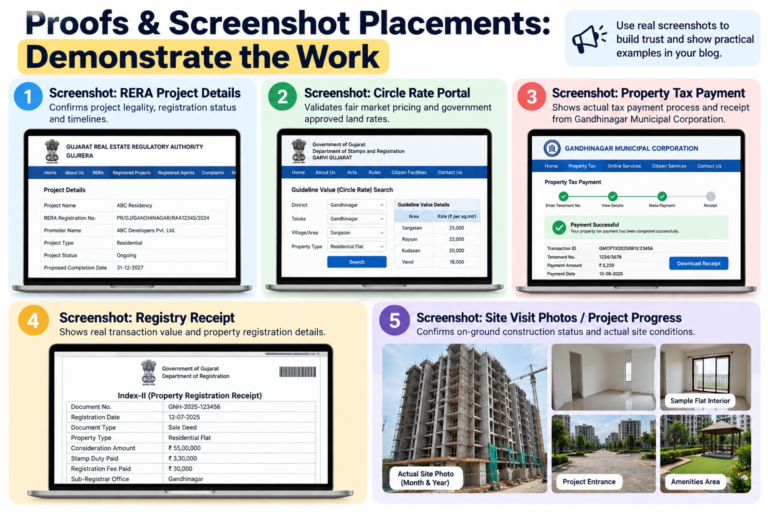
Proofs and Screenshot Placements: Demonstrate the Work
Who This Guide Is Not For
Affordable digital marketing is useful when it is connected to a realistic business objective. It is not a shortcut to guaranteed sales.
Who should rethink spending on marketing
- Businesses that have not identified a clear target customer.
- Founders who cannot explain why someone should choose their offer.
- Businesses whose prices leave too little margin to acquire customers profitably.
- Companies expecting guaranteed rankings, sales, or viral reach.
- Owners who cannot respond to enquiries or fulfil orders reliably.
These businesses may benefit more from customer interviews, offer refinement, pricing improvements, or operational preparation before spending heavily.
Who should wait before running paid advertisements
A business should consider delaying paid campaigns if its website is broken, its product is not ready, its contact process does not work, or it cannot afford to lose the test budget.
Waiting is not always the answer. Direct outreach, customer conversations, partnerships, and small organic experiments can help validate demand without committing substantial advertising funds.
Who may be better off with DIY marketing
A founder with a small budget, a straightforward service, and time to learn may be better off managing basic SEO, business listings, and content independently.
Professional help becomes more valuable when the task requires specialised skills, consumes too much founder time, or has a measurable commercial justification.
What this guide will not help you achieve
This guide does not promise overnight success, instant SEO rankings, guaranteed customer acquisition costs, or speculative growth based on marketing rumours.
Its purpose is to help you build a measurable and sustainable acquisition process—not to make a weak business appear successful through advertising.
If I Were Launching a Startup Today
If I were launching a new business in India today, I would not start by buying an expensive marketing package. I would first validate demand, improve the offer, and invest in the channel most likely to reach my first paying customers.
Here is the order I would follow.
First, I would speak to potential customers. I would identify the problem they are willing to pay to solve and test whether my offer addresses it.
Second, I would build a simple, trustworthy online presence. I would make the product or service, pricing approach, contact details, and next step obvious.
Third, I would choose one primary channel. For a local service business, that might be local SEO and customer referrals. For a B2B startup, it might be direct outreach and useful content. For an e-commerce business, it might be product-page improvements followed by a controlled advertising test.
Fourth, I would set a strict spending limit. I would decide in advance how much I could afford to spend to learn whether the channel works. I would not borrow money or commit essential operating funds to an unproven campaign.
Fifth, I would measure actual business outcomes. I would focus on qualified leads, sales, customer acquisition cost, contribution margin, and the ability to repeat the result.
What I would negotiate hardest
If I hired an agency, I would negotiate clarity and accountability rather than simply the lowest monthly fee. I would want a defined scope, transparent reporting, access to all business accounts, clear ownership of content and campaign data, and no guaranteed-ranking promises.
One red flag I would never ignore
I would walk away from any provider that promised guaranteed first-page rankings or a fixed number of sales without first understanding my industry, competition, margins, offer, and target customers.
My strongest recommendation: Start with the smallest experiment that can answer an important business question. Spend more only when the evidence justifies it. If the offer is not converting, fix the offer before buying more traffic.
Conclusion:
Affordable digital marketing solutions for startups are not about using every free tool or finding the cheapest service provider. They are about selecting the right activities, controlling costs, learning from customer behaviour, and investing in what works.
For a new business in India, a practical starting point is to:
- Understand your target customer and business economics.
- Create a clear and trustworthy website.
- Focus on one primary acquisition channel.
- Use SEO and content to build long-term visibility.
- Test paid campaigns within a strict budget.
- Track qualified enquiries, sales, and profitability.
- Review results before committing more money.
You do not need a large marketing budget to begin learning what your customers want. You do need a clear offer, consistent execution, and the discipline to stop activities that do not justify their cost.
A practical next step
Before spending your next ₹5,000 on marketing, write down three things: your ideal customer, the specific result you want from the campaign, and the maximum amount you can afford to spend testing it.
If you cannot define those three things, postpone the campaign and improve your plan first.
Have a question about marketing your startup on a limited budget? Share your business type, target customers, and approximate monthly budget. The right starting channel may be different for a local service business, an online store, and a software startup.

One Response